


As part of the Women Can Build LatAm project, co-funded by the European Union’s Erasmus+ programme, a series of working sessions have been held across partner countries to foster dialogue, exchange experiences and reflect on the barriers and opportunities related to increasing women’s participation in the construction sector.
In Spain, these sessions took place during April and May 2025, led by the Madrid Employment Agency and Fundación Laboral de la Construcción, the project’s Spanish partners.
The first session was held on 23 April at the Municipal Green Employment School, bringing together women currently training or working in traditionally male-dominated trades such as welding, railway maintenance and machinery operation. The participants shared their experiences, reflected on the barriers they have overcome, and proposed actions to transform the sector into a more inclusive and equitable space. The workshop focused on enhancing women’s green and digital skills, strengthening links between training and the labour market, and promoting female employability in emerging industries.
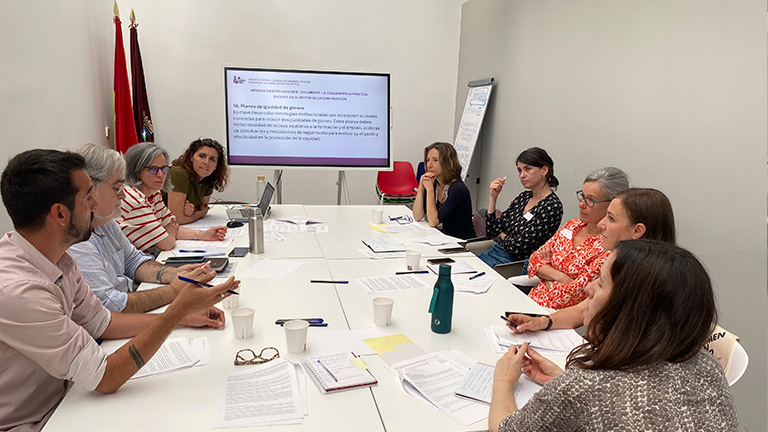
The second workshop took place on 28 April and was aimed at training institutions and educators, with the objective of assessing measures to improve women’s inclusion in the sector and to strengthen both knowledge and retention in employment. Participants included vocational training centres, public institutions, employment counsellors, training materials developers, and job placement specialists. Together, they explored key levers to raise awareness of the sector and increase female representation in classrooms.
Finally, on 6 May, a workshop was held at the Agency’s headquarters in Madrid for companies in the construction sector and related fields. Representatives from companies such as COMSA, Ferrovial, CITOP, Eulen and Carrefour participated in the session, discussing the benefits, challenges and opportunities surrounding women’s inclusion in the sector. They reviewed the results of the previous Women Can Build project (2017–2020) and evaluated current measures promoting workplace equality, with the aim of contributing to the development of an International Action Plan to boost female inclusion in construction.
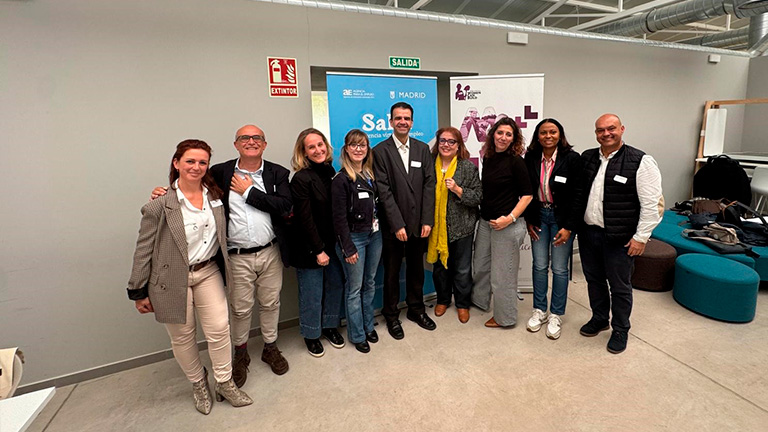
These sessions have helped to identify good practices, persistent barriers, and strategic actions to move towards a more equal sector. They have also encouraged meaningful dialogue, among: women workers, students, educators, and companies; strengthening international cooperation and the commitment of all stakeholders involved.